
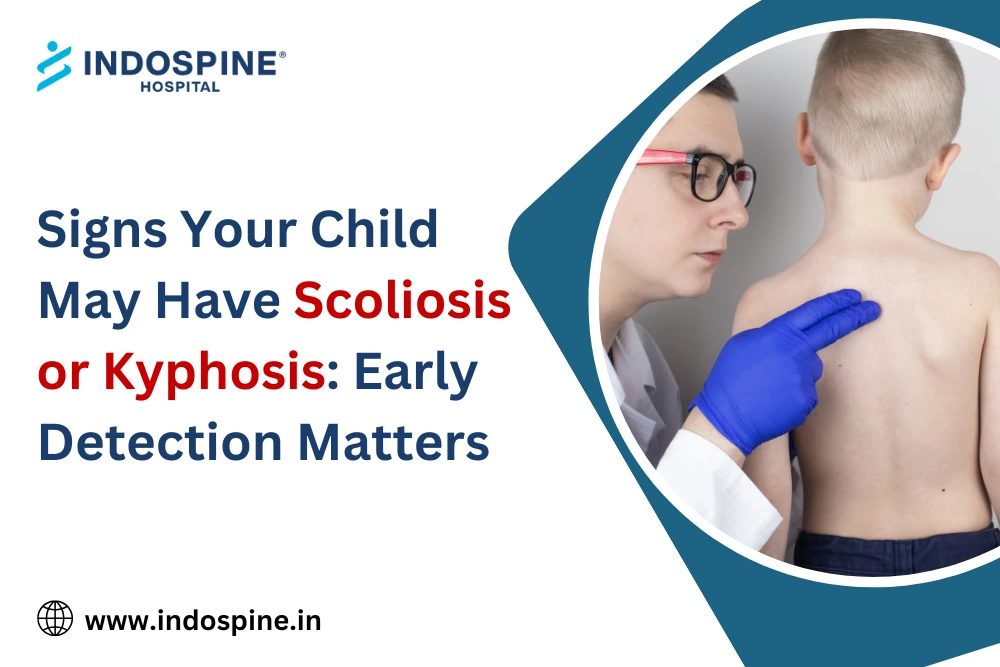
As a parent, if you notice any change in your child’s posture or spine, consult the spine specialist first. This type of situation is called scoliosis and kyphosis which occur silently in childhood. Sometimes it is not observed by parents and becomes a serious and painful health condition for children as time goes on. So here we discuss the early signs of kyphosis and scoliosis in children. Hopefully these both conditions can be treated without surgery.
In this blog, we’ll help you recognize the warning signs, understand diagnostic steps, and explore the best options for kyphosis and Scoliosis Treatment in India.
What Are Scoliosis and Kyphosis?
Scoliosis
Scoliosis is a condition where the spine curves sideways, typically in an “S” or “C” shape. It most often appears during the growth spurt before puberty and can range from mild to severe.
Kyphosis
Kyphosis refers to an exaggerated forward rounding of the upper back. While a certain degree of curvature is normal, kyphosis becomes a concern when it causes discomfort, postural issues, or aesthetic deformities.
Signs of Scoliosis in Children
Early detection of scoliosis can lead to more effective non-surgical treatment. Keep an eye out for the following signs of scoliosis in children:
- Uneven shoulders or shoulder blades
- One hip higher than the other
- Leaning to one side while standing
- Ribs sticking out more on one side
- Clothes not fitting properly (e.g., one pant leg shorter)
- Back pain or fatigue after standing or sitting
If you notice these signs, it’s important to consult a pediatric orthopedic specialist for a spinal exam and X-ray.
Early Signs of Kyphosis
Unlike scoliosis, kyphosis often presents as poor posture or a visible hump on the back. Here are some common early signs of kyphosis to look for:
- A rounded or hunched upper back
- Head and shoulders leaning forward
- Back pain, especially in the upper back
- Fatigue from sitting or standing too long
- Tight hamstrings or stiff spine
Some children may also complain of self-consciousness due to visible changes in posture. Timely intervention with physiotherapy, bracing, or medical guidance can prevent the curve from worsening.
Diagnosis and Screening
If you suspect scoliosis or kyphosis, your child’s doctor will typically:
- Perform a physical exam, including the “forward bending test.”
- Order X-rays to determine the degree and type of curvature.
- Evaluate family history and growth charts, as spinal deformities can be hereditary.
In schools, scoliosis screenings are sometimes done as part of routine health checkups, though not all cases are detected early this way.
Scoliosis Treatment in India
India has made significant strides in offering world-class spinal care. The approach to Scoliosis Treatment in India depends on the severity of the curve:
1. Observation
For mild curves, doctors may recommend monitoring with regular X-rays.
2. Bracing
If the curve is moderate and your child is still growing, a back brace may help prevent further curvature.
3. Physical Therapy
Specialized exercises and posture correction techniques may improve spinal alignment and reduce discomfort.
4. Scoliosis Surgery
In severe cases, especially those progressing despite bracing, scoliosis surgery like spinal fusion may be recommended. This involves correcting the curve and stabilizing the spine using rods, screws, and bone grafts.
India is home to many skilled surgeons offering affordable and advanced scoliosis correction procedures. You can consult a Top Spine Surgeon in India to assess whether surgery is necessary.
Kyphosis Treatment in India
Just like scoliosis, kyphosis treatment in India is tailored based on the cause and severity:
Postural Kyphosis
Often due to poor posture, this can be corrected with physiotherapy, stretching exercises, and strengthening the back muscles.
Scheuermann’s Kyphosis
A structural deformity typically found in teenagers. Bracing may be used if the curve is moderate, and surgery may be needed for severe curves.
Congenital Kyphosis
Present from birth, this type often requires early surgical intervention.
India offers comprehensive care for kyphosis across various specialties including orthopedics, neurosurgery, and physiotherapy. Many centers in major cities like Delhi, Mumbai, Chennai, and Ahmedabad are equipped with modern facilities for diagnosis, non-invasive treatments, and complex surgeries.
Choosing the Right Specialist
Given the complexity of spinal deformities, it’s important to choose a doctor with specialized training and experience. A Top Spine Surgeon in India can evaluate your child’s condition, explain treatment options clearly, and guide you through the decision-making process.
When selecting a surgeon, consider:
- Experience with pediatric scoliosis or kyphosis cases
- Access to modern surgical technology
- Positive patient reviews and success stories
- Multidisciplinary support including physiotherapy and rehabilitation
Final Thoughts
Catching the signs of scoliosis in children or early signs of kyphosis early can significantly reduce the need for invasive treatments later. Whether it’s bracing, exercise, or in rare cases scoliosis surgery, the key is timely diagnosis and a customized treatment plan.
With expert care now available at many centers across the country, Scoliosis Treatment in India and kyphosis treatment in India are not only accessible but also highly successful when managed by the right professionals. If you have concerns about your child’s posture, don’t hesitate to consult a Top Spine Surgeon in India—because early action can make all the difference.