
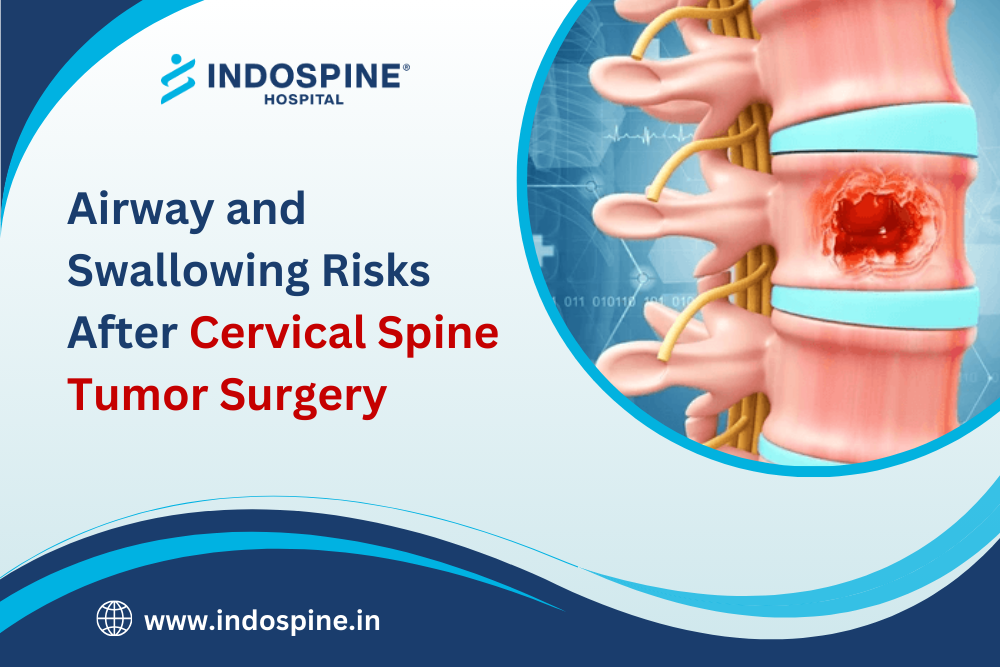
Cervical spine tumor surgery is a complex and delicate procedure because it involves the upper part of the spine that lies close to vital structures such as the airway, food pipe (esophagus), nerves, and spinal cord. While surgery is often necessary to relieve compression and prevent neurological damage, patients should also understand the possible airway and swallowing risks after cervical spine tumor surgery.
For patients seeking Cervical Spine Tumor Treatment in Ahmedabad, knowing these risks-and choosing the right surgeon-can make recovery safer and smoother.
Why Are Airway and Swallowing Functions at Risk?
The cervical spine sits just behind the throat and windpipe. During tumor removal, tissues around the neck may be retracted, swollen, or irritated. This can temporarily or, in rare cases, permanently affect breathing and swallowing.
These risks are not the same for every patient and depend on:
- Tumor size and location
- Surgical approach (anterior or posterior)
- Duration of surgery
- Patient’s overall health
Understanding these cervical spine tumor surgery risks helps patients prepare better for recovery.
Airway Complications After Cervical Spine Tumor Surgery
Airway complications after cervical spine tumor surgery are uncommon but important to recognize early.
Common airway-related issues include:
- Throat swelling causing breathing difficulty
- Hoarseness or weak voice
- Shortness of breath in the early post-operative period
- Rarely, airway obstruction due to edema
These problems usually appear within the first 24–72 hours after surgery and are closely monitored in the hospital.
How doctors reduce airway risks:
- Careful surgical technique
- Limiting tissue retraction
- Post-operative airway monitoring
- Steroids to reduce swelling if required
Choosing an experienced surgeon significantly lowers these risks.
Swallowing Problems After Cervical Spine Surgery
Swallowing problems after cervical spine surgery, also called dysphagia, are more common than airway issues and usually temporary.
Patients may experience:
- Difficulty swallowing solids or liquids
- Sensation of food getting stuck
- Mild throat pain while swallowing
These symptoms often improve within a few weeks as swelling subsides and tissues heal.
Why swallowing issues occur:
- Retraction of the esophagus during surgery
- Local nerve irritation
- Post-operative inflammation
In rare cases, swallowing therapy may be recommended if symptoms persist.
How Long Do These Problems Last?
Most airway and swallowing difficulties are short-term.
- Mild swallowing difficulty: improves in 2–4 weeks
- Voice changes: often resolve within weeks
- Serious airway issues: rare with proper care
Patients are advised to report any breathing difficulty, choking, or persistent swallowing problems immediately.
Importance of Expert Surgical Care
The risk of complications depends greatly on the surgeon’s experience and planning. Advanced imaging, precise tumor removal, and nerve protection are key factors in successful outcomes.
For patients looking for Cervical Spine Tumor Treatment in Ahmedabad, expert care ensures both tumor control and functional safety.
Why Choose Dr. Tarak Patel – Best Spine Surgeon in Ahmedabad?
When dealing with delicate cervical spine tumors, choosing the right surgeon is crucial. Dr. Tarak Patel is widely recognized as a Best Spine Surgeon In Ahmedabad, known for his expertise in complex spine tumor surgeries.
What makes his approach patient-focused:
- Extensive experience in cervical spine tumor surgery
- Advanced surgical planning to minimize airway and swallowing risks
- Emphasis on nerve protection and functional recovery
- Comprehensive post-operative monitoring and rehabilitation guidance
Patients under his care benefit from a balance of oncological safety and quality of life preservation.
Recovery Tips for Patients After Surgery
To reduce discomfort and promote healing:
- Eat soft foods initially
- Take small bites and chew slowly
- Stay well hydrated
- Follow post-operative neck positioning advice
- Attend all follow-up appointments
These steps help reduce swallowing problems after cervical spine surgery and support faster recovery.
Frequently Asked Questions
Are airway complications common after cervical spine tumor surgery?
No, they are relatively uncommon and usually temporary when surgery is performed by an experienced spine surgeon.
Is difficulty swallowing permanent?
In most cases, swallowing problems are temporary and improve within weeks.
When should I seek medical help after surgery?
If you experience breathing difficulty, severe swallowing issues, or worsening symptoms, contact your surgeon immediately.
Final Thoughts
Understanding airway complications after cervical spine tumor surgery and swallowing problems after cervical spine surgery helps patients approach treatment with confidence rather than fear. While these risks exist, they are manageable and often temporary with expert surgical care.
If you or a loved one requires Cervical Spine Tumor Treatment in Ahmedabad, consulting Dr. Tarak Patel, a trusted Best Spine Surgeon In Ahmedabad, ensures advanced treatment with a strong focus on safety, recovery, and long-term well-being.