
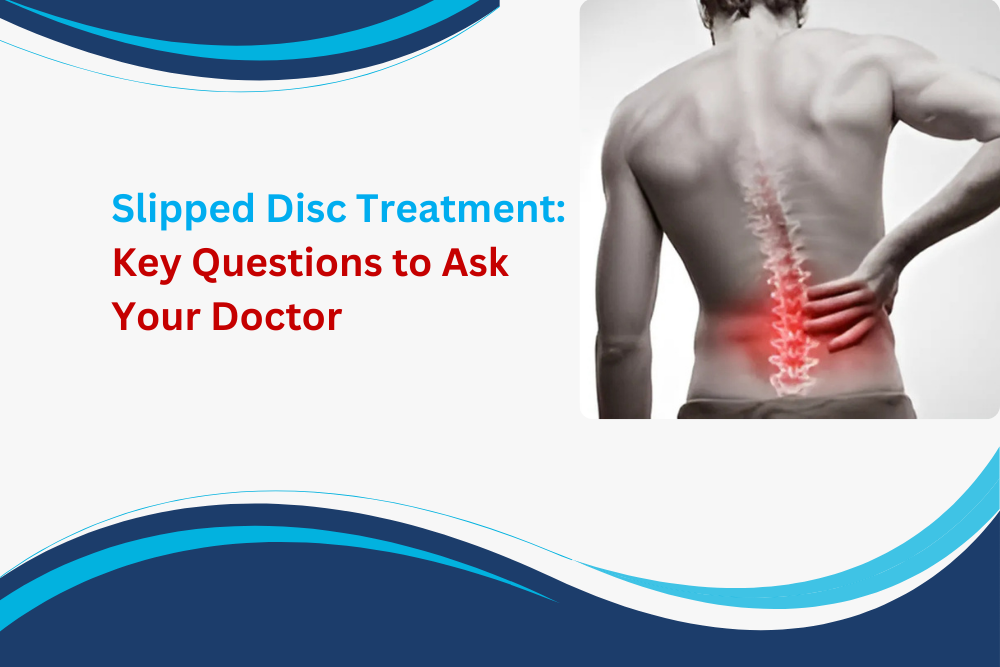
A slipped disc, also known as a herniated disc, can cause significant pain, numbness, and difficulty performing everyday activities. Whether it’s a minor discomfort or severe pain affecting your mobility, knowing your treatment options is essential. One of the most important steps in managing a slipped disc is asking the right questions to your doctor. Doing so helps you make informed decisions, understand your recovery process, and choose the treatment plan that suits your needs.
If you are looking for the slipped disc treatment in Ahmedabad, this guide will help you know what questions to ask your doctor and how to find the right care.
Why Asking Questions Matters?
Many patients assume that the doctor will provide all the necessary guidance. While doctors are experts, being proactive ensures that you fully understand your condition and the available treatment options. Asking the right questions:
- Helps you learn about all possible treatment options, both surgical and non-surgical.
- Clarifies the risks, benefits, and expected outcomes of each option.
- Improves communication and builds a strong doctor-patient relationship.
- Empowers you to participate actively in your healthcare decisions.
Finding a doctor who listens and provides clear explanations is crucial, especially when seeking the best treatment for a slipped disc in Ahmedabad.
Key Questions to Ask Your Doctor
Here are the essential questions every patient should consider before starting treatment:
1. What Treatment Options Are Available for My Slipped Disc?
Your doctor should explain all possible approaches based on your condition:
- Conservative treatments: These include physiotherapy, medications to reduce inflammation, pain management techniques, and steroid injections. Many patients find relief without surgery.
- Surgical options: If symptoms are severe or do not improve with non-surgical treatment, procedures such as microdiscectomy, laminectomy, or minimally invasive surgeries may be recommended.
Knowing all available options allows you to weigh the pros and cons before deciding on a treatment path.
2. What Are the Risks and Benefits of Each Treatment?
Every treatment has potential risks. Conservative treatments are generally safer but may take longer to relieve pain. Surgical treatments can offer faster relief but come with risks such as infection, nerve injury, or longer rehabilitation. Understanding these factors is essential for informed decision-making.
3. How Long Will Recovery Take?
Recovery time depends on the treatment type and your overall health. Ask your doctor about:
- How long you’ll need to stay off work or physical activity.
- When you can resume normal routines.
- Any restrictions during the recovery period.
This helps you plan your daily life and set realistic expectations.
4. What Lifestyle Changes Can Help With Healing?
Lifestyle adjustments often play a key role in managing a slipped disc. Your doctor may recommend:
- Exercises to strengthen back and core muscles.
- Proper posture and ergonomics at work or home.
- Weight management to reduce strain on the spine.
- Avoiding heavy lifting or repetitive bending until fully healed.
These changes can improve treatment outcomes and prevent future episodes.
5. Do You Offer Minimally Invasive or Advanced Surgical Techniques?
If surgery is necessary, ask about the methods used:
- Laparoscopic or microdiscectomy techniques reduce recovery time and minimize complications.
- Advanced technology may lead to smaller incisions, less pain, and faster return to daily activities.
Consulting a surgeon experienced in these techniques ensures safer and more effective treatment.
Choosing the Right Doctor for Slipped Disc Treatment
Selecting the best spine surgeon in Ahmedabad for slipped disc treatment is as important as choosing the right treatment. Consider these factors:
- Experience: Look for a doctor specializing in spine or orthopedic surgery with a strong track record in managing slipped discs.
- Patient reviews: Check testimonials or success stories to gauge patient satisfaction.
- Hospital facilities: Advanced hospitals with proper imaging, surgical equipment, and post-operative care can enhance recovery.
- Follow-up support: A good doctor provides guidance during rehabilitation and is available for any concerns after treatment.
A knowledgeable and experienced doctor can make a significant difference in recovery speed and overall outcomes.
Preparing for Your Consultation
To make the most of your appointment, prepare in advance:
- Bring medical records, imaging reports, and a list of current medications.
- Write down your symptoms, pain levels, and any triggers.
- List the questions you want to ask—including the ones mentioned above.
- Note any personal goals or concerns, such as returning to work or sports.
Being well-prepared helps the doctor provide personalized advice and ensures all your concerns are addressed.
Conclusion
Managing a slipped disc effectively requires a combination of the right treatment and a knowledgeable doctor. Asking the right questions ensures that you understand your options, minimize risks, and achieve a smooth recovery.
For patients in Ahmedabad, consulting the best treatment for a slipped disc in Ahmedabad means getting expert guidance, advanced surgical options if needed, and post-treatment support tailored to your needs. Taking an active role in your care is the first step toward relief from pain and regaining mobility.