
Introduction
Lower back pain is one of the most common complaints during pregnancy, affecting nearly half of all expecting mothers at some point. For many women, it starts as a mild ache and gradually becomes more noticeable as pregnancy progresses.
The good news is that pregnancy-related back pain is usually not a sign of anything dangerous. It’s driven by predictable hormonal and mechanical changes in your body as it prepares to carry and deliver your baby.
This guide explains why back pain happens during pregnancy, what’s safe to do about it, which symptoms need urgent medical attention, and how to manage pain safely through each trimester.
How Common Is Back Pain During Pregnancy?
Lower back pain affects roughly 40-50% of pregnant women overall, and the numbers rise as pregnancy progresses. Studies show about 28% of women experience it in the first trimester, rising to 37% in the second, and nearly 48% by the third trimester.
Prevalence also varies quite a bit by population and lifestyle factors, with some studies reporting rates as high as 71% in certain regions and as low as 26% in others. What’s consistent everywhere is that the pain tends to worsen as the pregnancy advances.
Interestingly, back pain doesn’t always disappear right after delivery. Around half of women who experience it during pregnancy may still have some pain a year later, and about 20% report lingering discomfort even three years postpartum.
Why Does Pregnancy Cause Lower Back Pain?
Pregnancy affects your spine and pelvis through several connected mechanisms working together, not just one single cause.
Hormonal Changes
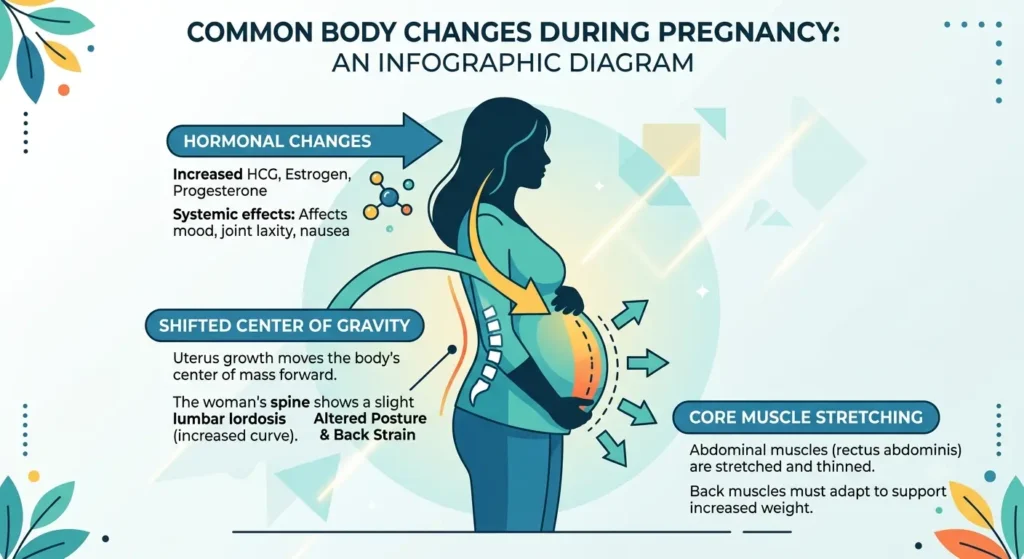
Your body produces higher levels of a hormone called relaxin during pregnancy, along with rising estrogen and progesterone. These hormones loosen the ligaments around your pelvis and spine to prepare your body for childbirth.
While this is necessary and healthy, it also makes your joints less stable than usual. The sacroiliac joints and pubic symphysis become more mobile, and this looseness can put extra strain on your lower back.
Mechanical and Postural Changes
As your baby grows, your body typically gains an average of 12 to 15 kg by the third trimester. This weight shifts your center of gravity forward, and your spine compensates by curving inward more than usual – a posture change called increased lumbar lordosis.
This altered posture places extra pressure on the joints and discs in your lower back. Over time, this added mechanical load is a major contributor to the aching, stiffness, and soreness many women feel.
Muscle and Core Changes
As your uterus expands, your abdominal muscles stretch and lengthen considerably. This reduces their ability to support your spine the way they normally would.
At the same time, your pelvic floor muscles can become fatigued, further reducing core stability. Your back muscles often tighten to compensate, which can contribute to stiffness and pain.
Who Is More Likely to Get Back Pain in Pregnancy?
Certain factors make some women more likely to experience significant back pain than others.
A history of back pain – especially if you had it during a previous pregnancy – is the strongest known predictor. Higher pre-pregnancy body weight, having multiple previous pregnancies, and a generally sedentary lifestyle before pregnancy also increase the likelihood.
Physically demanding jobs, prolonged standing, and higher stress or anxiety levels have also been linked to worse pain. None of these factors are within your control after the fact, but knowing them helps you plan ahead with your doctor.
When Is Back Pain a Warning Sign? (Red Flags)
Most pregnancy back pain is harmless and related to normal physical changes. However, certain symptoms alongside back pain need urgent medical evaluation rather than home management.
Contact your doctor immediately if you experience any of the following:
- Numbness in the inner thighs, buttocks, or groin area (saddle numbness)
- Sudden loss of bladder or bowel control
- Progressive weakness or numbness in your legs
- Fever, chills, or pain when urinating alongside back pain
- Vaginal bleeding, contractions, or a constant, severe pain that doesn’t ease with rest\
These symptoms could point to conditions unrelated to typical pregnancy back pain, ranging from nerve compression to kidney infections to labor-related concerns, and they need prompt evaluation. For a broader look at when back pain (in general, not just during pregnancy) needs medical attention, see our guide on whether back pain is always serious
Safe Ways to Relieve Back Pain During Pregnancy
The good news is that most pregnancy back pain responds well to simple, non-medical approaches. Exercise, posture correction, and a few supportive habits go a long way.
Stay Active
Regular, moderate exercise is one of the most effective ways to reduce pregnancy back pain. Research shows that women who exercise regularly report significantly less pain and better function than those who remain inactive.
Walking, swimming, and stationary cycling are all considered safe throughout pregnancy. Aim for around 150 minutes of moderate activity per week, spread across most days, unless your doctor advises otherwise.
Try Targeted Exercises
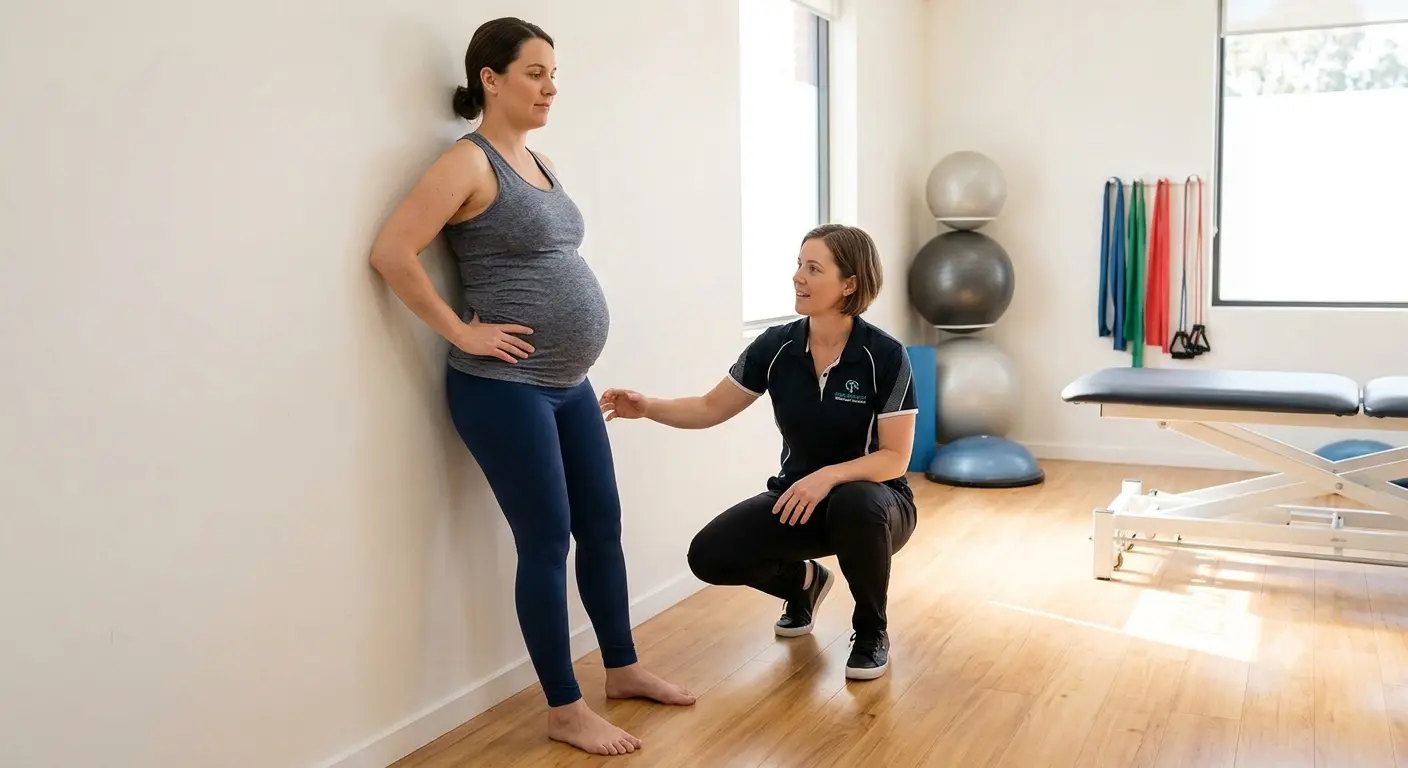
A few simple movements can offer quick relief and build the support your spine needs. Pelvic tilts standing against a wall and gently flattening your lower back for 10 seconds, repeated 10 times help activate your deep core muscles.
Cat-camel stretches, done on your hands and knees while gently arching and rounding your back, are another safe and effective option. Hip bridges and gentle core stabilization exercises can also help, though it’s best to learn proper form from a physiotherapist familiar with pregnancy modifications.
Consider Physical Therapy
gentle mobilization, and strengthening exercises tailored to your trimester. This kind of guided care tends to produce more consistent results than exercises done alone without proper form.
Use Supportive Aids
A pelvic support belt can help stabilize your pelvis and ease strain on the sacroiliac joints, particularly in the later trimesters. Sleeping on your side with a pillow between your knees also helps keep your spine aligned overnight.
A firm mattress is generally better than a soft one for pregnancy back pain, as excessive softness has been linked to worse symptoms in some studies. Warm baths or a heating pad on a low setting can also offer short-term comfort.
TENS Therapy
Transcutaneous electrical nerve stimulation, or TENS, is a safe, drug-free option that some women find very effective. It involves a small device that sends gentle electrical pulses through the skin to ease pain, and it carries no known risk to the baby.
Medications: What’s Safe and What to Avoid
If non-medical approaches aren’t enough, medication may be considered but not all pain relievers are equally safe during pregnancy.
Acetaminophen (paracetamol) is generally considered the first-choice option for pain during pregnancy when used at recommended doses. It’s important to use it only as needed rather than continuously, and always in consultation with your doctor.
NSAIDs such as ibuprofen and naproxen require much more caution. The FDA has warned against using NSAIDs at 20 weeks of pregnancy or later , since they may cause rare but serious kidney problems in the unborn baby, leading to low amniotic fluid levels.
Never start or stop any medication during pregnancy without your doctor’s guidance, even ones that seem harmless. What’s safe can depend heavily on exactly how far along you are.
How Pregnancy Back Pain Differs From Other Types of Back Pain
It’s worth understanding that pregnancy-related back pain has a somewhat different profile than typical mechanical back pain seen in the general population. The causes, timeline, and even treatment options differ because of the physical and hormonal changes unique to pregnancy.
If you’re trying to understand whether your particular pain pattern fits the expected pregnancy picture, or whether it might be something else, it helps to also look at the broader common causes of lower back pain in young adults since many pregnant women fall into this age group and some of these everyday causes can also play a role alongside pregnancy-specific factors.\
Will the Pain Go Away After Delivery?
For most women, back pain does improve significantly after childbirth as hormone levels normalize and the physical load on the spine decreases. However, it’s worth setting realistic expectations rather than assuming pain disappears instantly.
Some women continue to experience mild back pain for months after delivery, and a smaller percentage report lingering discomfort even a year or more later. Continuing gentle core-strengthening exercises after delivery, once cleared by your doctor, can support a fuller recovery.
Getting the Right Treatment Plan
Because every pregnancy is different, the right combination of exercise, support aids, and (if needed) medication should be tailored to your specific symptoms, trimester, and medical history. What works well for one woman may not be the right fit for another.
If you’re unsure where to start, or your pain isn’t responding to basic home measures, it helps to work through how to choose the right treatment for your lower back pain alongside your obstetrician or a spine specialist, so your plan accounts for both your pregnancy and your specific pain pattern.
According to MedlinePlus, part of the U.S. National Library of Medicine, back pain is one of several common aches during pregnancy driven by loosening ligaments, and while usually harmless, any severe or unusual pain should always be discussed with your provider.
Conclusion
Lower back pain during pregnancy is extremely common, and in the vast majority of cases, it’s a normal part of the physical changes your body goes through to support your growing baby. Hormonal shifts, weight gain, and postural changes all play a role, and simple measures like staying active, using proper posture, and gentle targeted exercises can meaningfully ease the discomfort.
That said, it’s important to stay alert to warning signs like numbness, bladder changes, fever, or severe unrelenting pain, since these need prompt medical evaluation rather than home management. With the right combination of safe exercise, posture care, and medical guidance when needed, most women manage their pregnancy back pain well and see it improve significantly after delivery.
If your back pain is persistent, severe, or not responding to basic self-care, don’t hesitate to consult a spine specialist alongside your obstetrician. A tailored assessment can rule out other causes and help you stay comfortable through the rest of your pregnancy.